




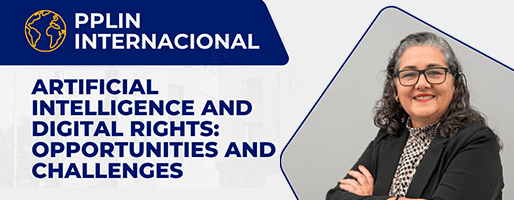

On 15 September 2026, the Rio de Janeiro State University (UERJ), through the Graduate and Postgraduate Program in Linguistics and Literature at the Faculty of Teacher Education (FFP), hosted the international lecture Artificial Intelligence and Digital Rights: Opportunities and Challenges, delivered by Beatriz Peña Acuña, Professor at the University of Huelva. This activity took place as part of the academic activities linked to the international AMALLE project.
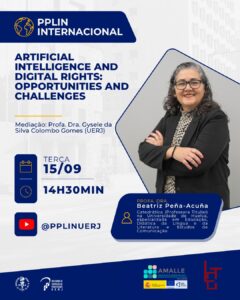
The lecture was made possible by an invitation from Professor Gysele Colombo Gomes of the Rio de Janeiro State University, who also moderated the academic gathering. The event brought together university faculty, undergraduate students, and postgraduate students interested in analyzing the impact of artificial intelligence on language, literature, and cultural studies.
Speech. During her lecture, Professor Peña Acuña addressed the implications of the current artificial intelligence revolution for communication, knowledge production, and cultural participation. The presentation also analyzed the opportunities offered by new technologies for educational and scientific innovation, while addressing the ethical, legal, and social challenges posed by their expansion.
The presentation was structured around five main thematic axes: digital transformation, innovation and rights, opportunities, challenges, and emerging risks of artificial intelligence. To help clarify the theoretical concepts presented, the speaker included practical examples aimed at both university faculty and students.
Q&A session. Following the presentation, a lively discussion took place with participation from both attendees connected to the session and viewers following the broadcast on YouTube. The questions raised focused on the ethical challenges of artificial intelligence, its impact on higher education, and the transformations it is bringing about in linguistic, literary, and cultural studies. The speaker answered the various questions, fostering an enriching academic exchange.
The event concluded with a shared message of institutional cooperation. Representatives from both the University of Huelva and the Rio de Janeiro State University expressed their interest in further strengthening academic and scientific ties between the two institutions, fostering future joint initiatives.
Access. The lecture was held in a virtual format via the StreamYard platform and live-streamed on YouTube, enabling simultaneous participation from different locations and significantly expanding the reach of the academic activity.